
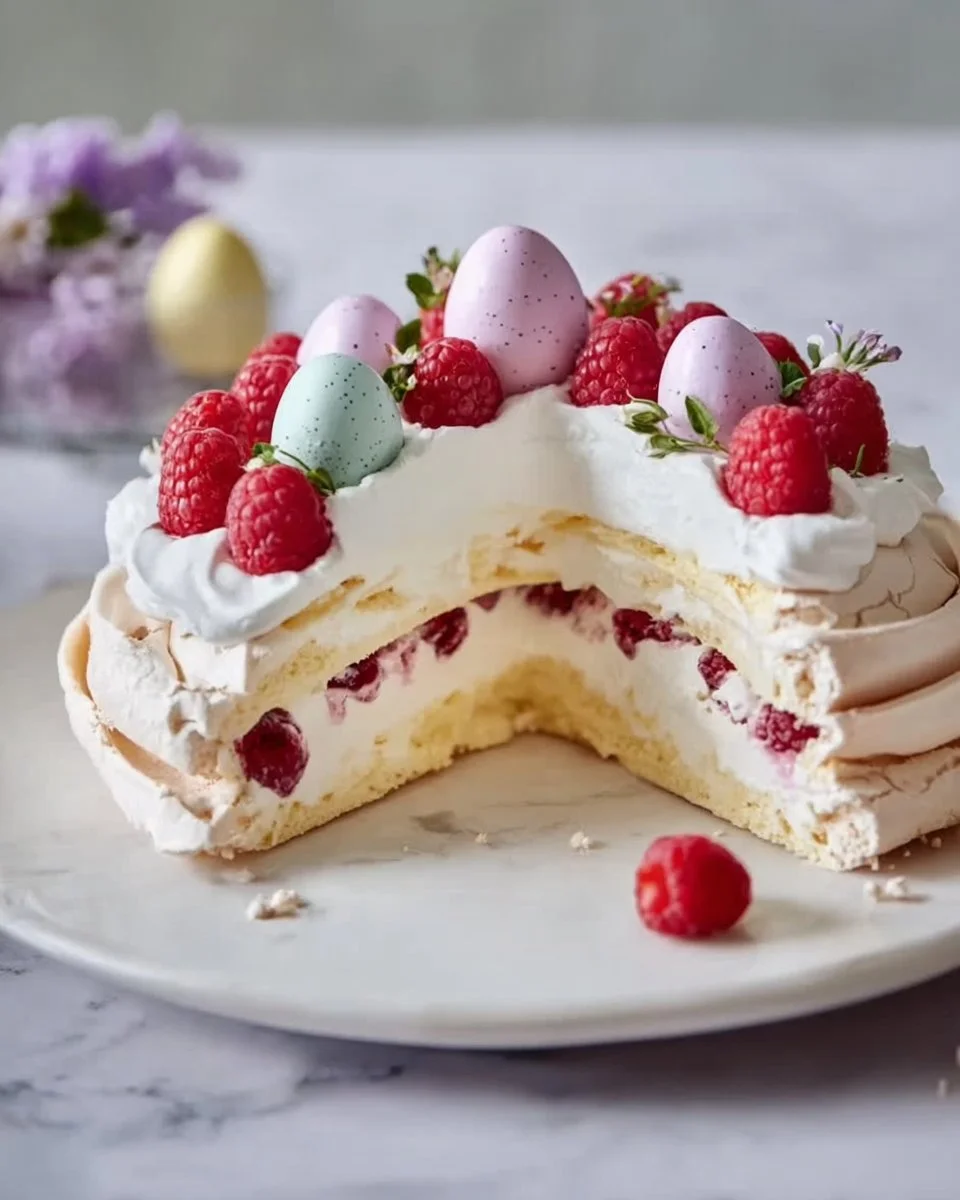
The Ultimate Easter Pavlova: A Sweet Celebration of Flavor and Memories
Growing up, Easter was a magical time filled with family traditions, colorful eggs, and desserts that made our hearts sing. Among those beloved treats was my mom’s delightful Easter Pavlova, a show-stopping dessert that made every holiday memorable. I remember sitting at the table, the aroma of fresh fruits and whipped cream mingling with laughter, while we savored each crunchy, sweet morsel of meringue that melted on our tongues. It wasn’t just a dessert; it was a celebration of love, warmth, and togetherness.
This Easter Pavlova recipe is not only a nod to those treasured moments, but it’s also elevated to a whole new level. With tips and tricks I’ve gathered over years of baking, I’m excited to share the secrets behind making a perfectly crispy crust with a soft, marshmallowy center that will impress your guests and be the highlight of your feast. Trust me, this isn’t just any ordinary Pavlova recipe; it has been perfected for taste and texture, promising to bring joy to your gathering.
Ready to sprinkle some magic in your kitchen? Let’s dive into what makes this Easter Pavlova a must-try and learn how to recreate it for your family and friends.
What Are Easter Pavlova?
The Easter Pavlova is a light, airy dessert named after the famous Russian ballerina Anna Pavlova, who toured Australia and New Zealand in the 1920s. Much like a delicate dancer, this dessert embodies grace with its stunning presentation and delightful taste.
Imagine biting into a delicate, crisp meringue shell that crumbles beautifully to reveal a soft, chewy interior, topped lavishly with sweet whipped cream and an array of vibrant seasonal fruits. Each bite is a harmonious blend of flavors and textures—sweet, tangy, and slightly tart, thanks to the fruits.
Perfect for Easter gatherings, this Pavlova symbolizes renewal and celebration, making it an ideal centerpiece for your spring table. Whether you whip it up for a family brunch or a festive dinner, it’s bound to be the star of the show.
Why You’ll Love This Recipe
Impressive yet Simple: While the Easter Pavlova looks intricate and impressive, it’s surprisingly easy to make! You’ll feel like a culinary genius without spending all day in the kitchen.
Cost-Effective & Customizable: This recipe uses just a handful of ingredients that are likely already in your pantry. Plus, you can customize it with your favorite seasonal fruits—think strawberries, blueberries, or even tropical options like mango!
Better Than Store-Bought: Let’s be real: nothing beats the homemade touch! Store-bought Pavlovas often lack that delicate crispiness and flavor you get from making your own. Plus, you can control the sweetness and toppings.
Make Ahead: If you’re busy preparing for a holiday feast, you’ll love that the meringue can be made a day in advance. Just store it in an airtight container until ready to serve.
Perfect for Any Occasion: While wonderfully suited for Easter, this dessert is perfect for birthdays, celebrations, or just a cozy weekend treat. It’s versatile enough to fit any spring or summer gathering.
With just a bit of effort, you’ll be rewarded with a stunning dessert that will leave your friends and family begging for seconds!
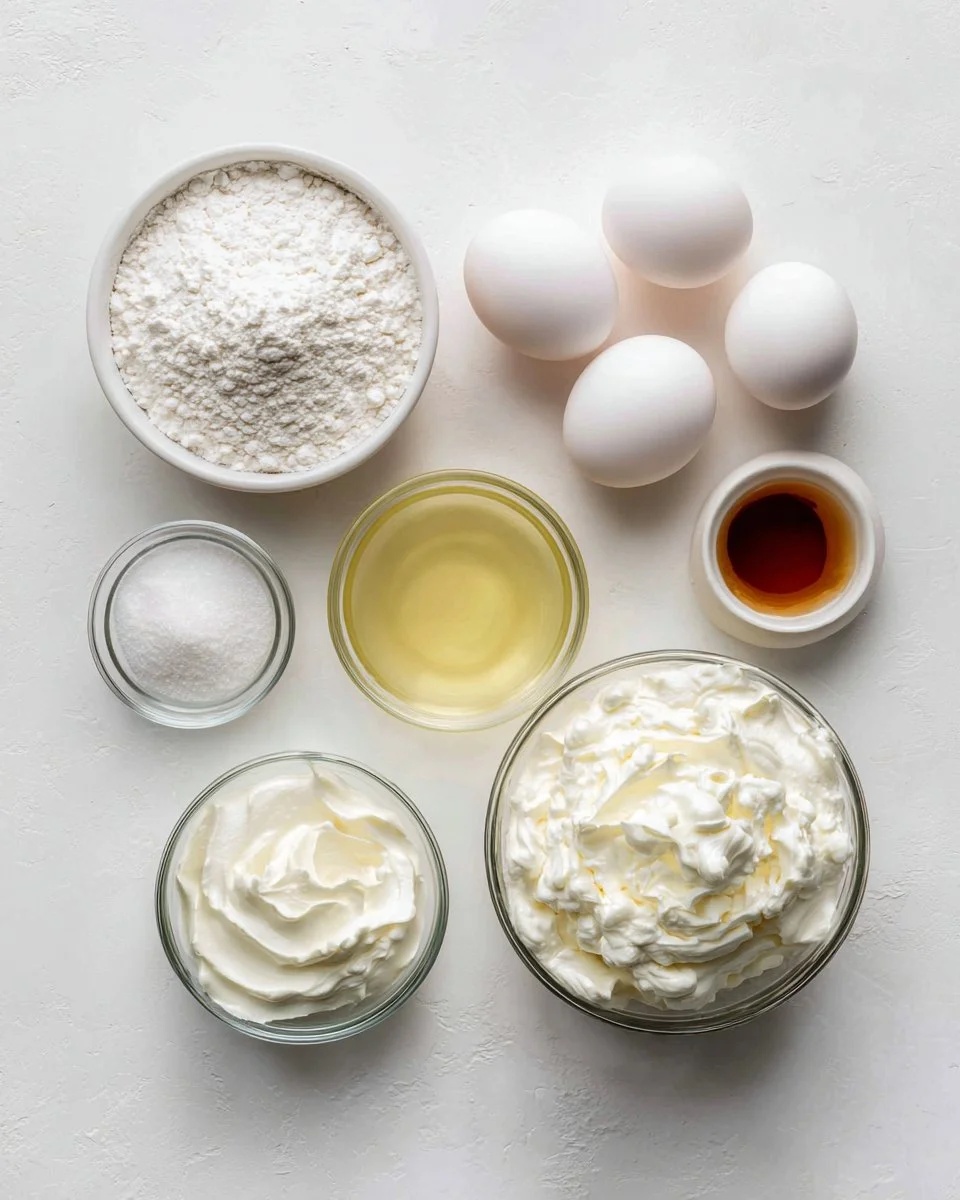
Ingredients
To make this delightful Easter Pavlova, you’ll need:
- 4 large egg whites: Fresh and at room temperature recommended for the best volume.
- 1 cup granulated sugar: Use a high-quality brand for the best flavor—C&H or Domino are great options.
- 1 teaspoon cornstarch: This helps achieve that lovely chewy texture in the center.
- 1 teaspoon white vinegar: Adds stability to the meringue and enhances the texture.
- 1 teaspoon vanilla extract: Always opt for pure vanilla extract over imitation for a more flavorful result.
- Whipped cream: Freshly whipped is ideal; you can sweeten it with a little sugar and vanilla.
- Seasonal fruits: I love using a medley of berries, kiwi, and passionfruit, but feel free to choose what’s in season or your personal favorites!
Ensure that your mixing bowl and beaters are squeaky clean, as any grease can prevent the egg whites from reaching their full potential.
Step-by-Step Instructions
Preheat the Oven: Begin by preheating your oven to 300°F (150°C). Line a baking sheet with parchment paper and draw a circle about 8 inches in diameter as a guide.
Beat the Egg Whites: In a clean, dry bowl, beat the egg whites on medium speed until they become foamy. This usually takes about 1-2 minutes.
Add the Sugar Gradually: Once foamy, increase to high speed and gradually add the sugar, one tablespoon at a time. Beat well after each addition until you achieve stiff, glossy peaks. This should take about 5-7 minutes.
Fold in the Dry Ingredients: Gently fold in the cornstarch, vinegar, and vanilla extract using a spatula. Be careful not to deflate the meringue—this is key for a light texture!
Shape the Meringue: Spoon or pipe the meringue onto the prepared baking sheet in nests or rounds within your drawn circle, creating a slight dip in the center for the toppings later.
Bake: Place in the oven and reduce the temperature to 250°F (120°C) immediately. Bake for 1 hour, then turn off the oven but leave the meringues inside to cool completely—this ensures they set perfectly.
Top and Serve: Once cooled, carefully remove the meringues. Top with freshly whipped cream and an assortment of seasonal fruits. Serve immediately and enjoy the delighted reactions of your guests!
Chef’s Tip: If you like your fruit macerated, toss them in a bit of sugar and let them sit for about 15 minutes—this will release their juices and enhance the flavor!
Expert Tips & Tricks
Storage: Unfilled meringues can be stored in an airtight container at room temperature for up to 3 days. If you fill them with cream and fruits, it’s best consumed immediately to prevent sogginess.
Make-Ahead: You can prepare the meringue a day in advance. Just remember to wait to top with whipped cream and fruits until right before serving.
Humidity Check: Meringue can be finicky in humid weather. If it’s humid out, consider baking on a drier day for the best results.
Common Mistakes: Avoid overbeating the egg whites—they should be glossy, but if they start to look dry, stop. Overbaked meringues can crack too much!
Troubleshooting: If your meringue cracks, don’t worry! Simply cover any blemishes with whipped cream and fruits; they’ll be just as delicious!
Serving Suggestions
To really wow your guests, serve your Easter Pavlova alongside a light fruit salad or a refreshing mint-infused water. For a stunning presentation, consider serving each meringue in its own colorful bowl, garnished with mint leaves or edible flowers. Perfect for spring celebrations, it pairs beautifully with brunch or a light afternoon tea.
Variations & Substitutions
Feel free to get creative with your Easter Pavlova! Here are some ideas:
Different Flavor Combos: Try adding a lemon or lime zest to your whipped cream for a citrus twist or incorporate cocoa powder for a chocolatey meringue base.
Dietary Adaptations: To make a gluten-free version, simply ensure all ingredients are certified gluten-free, as meringue is naturally gluten-free.
Seasonal Variations: In the fall, consider caramelized apples and spiced cream, while winter could feature citrus segments and pomegranate seeds.
Nutrition & Storage Info
- Prep Time: 30 minutes
- Cook Time: 1 hour + cooling time
- Total Time: Approximately 1.5-2 hours
- Yield: Serves about 8
- Estimated Calories: About 160 calories per serving (without toppings)
- Storage: Keep unfilled meringues at room temperature for up to 3 days. Filled versions are best eaten immediately but can last in the fridge for up to 1 day before the meringue becomes soggy.
FAQ Section
Can I make Pavlova in advance?
Yes! You can prepare the meringue up to a day in advance. Fill with whipped cream and fruits just before serving.What can I use instead of cornstarch?
A common substitute is potato starch, which works similarly for texture.Why did my meringue crack?
Cracking can happen but is often due to overbaking or too rapid a temperature change. Ensure to bake slowly and allow for gradual cooling.How do I know if my meringue is done?
Meringue should be crisp on the outside and dry to the touch. Ideally, it should lift easily off the parchment.Can I use liquid egg whites?
Yes, liquid egg whites can be used, but for best results, ensure they are fresh and pasteurized.What fruits work best?
Seasonal berries, kiwi, and stone fruits are excellent. Use whatever is fresh and flavorful!What if my egg whites won’t whip?
Check your mixing bowl and utensils for grease. It’s vital to ensure everything is clean and fat-free.How do I store the leftover Pavlova?
Store filled Pavlova in the fridge and consume within a day. Unfilled meringues can be stored in an airtight container.Can I freeze Pavlova?
It’s best to freeze unfilled meringues for optimal texture. Fill them after thawing.What can I serve with Pavlova?
Light desserts, teas, or even a glass of sparkling wine can enhance your Pavlova experience!
Conclusion
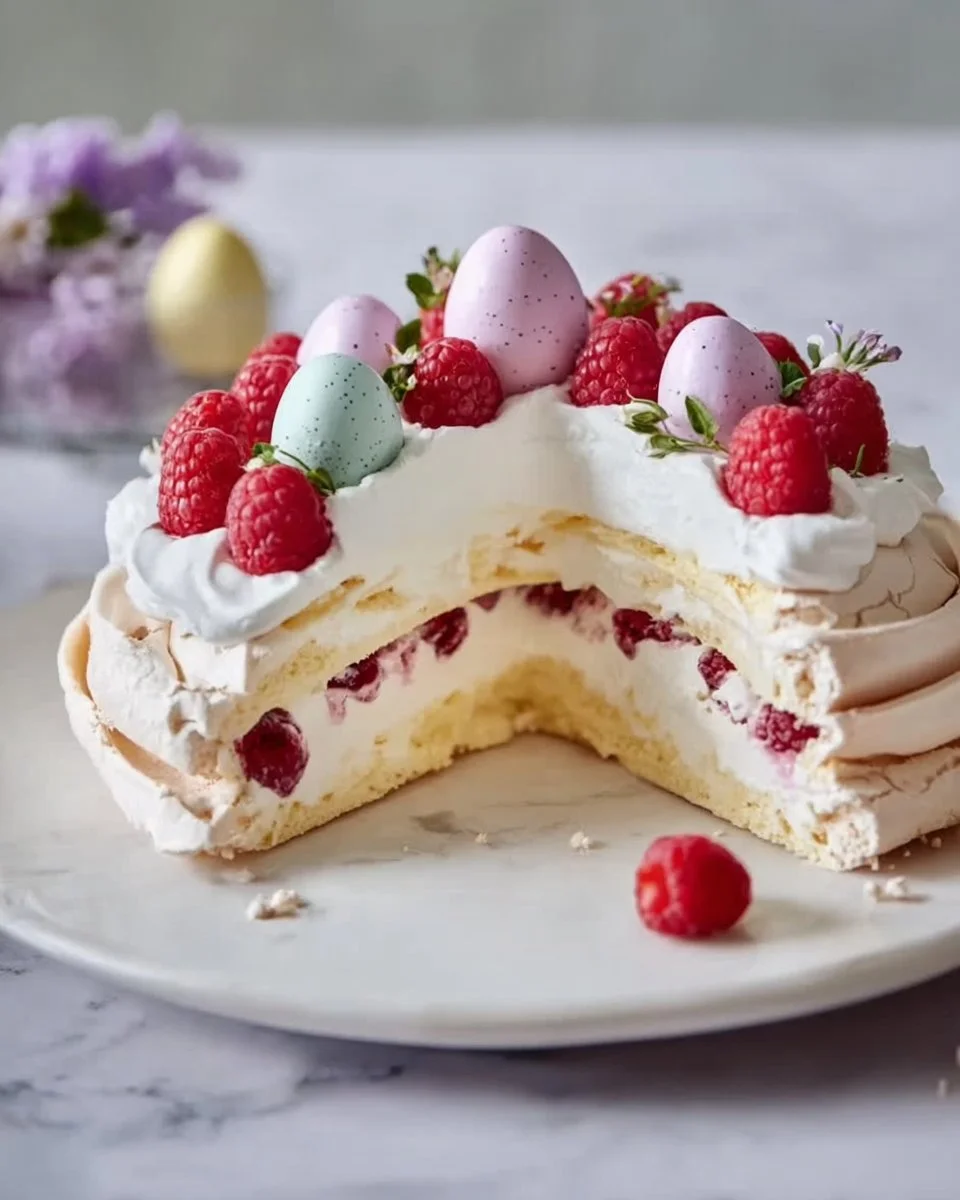
This Easter Pavlova is more than just dessert; it’s a way to create cherished memories and share smiles with loved ones. Its delicate texture and vibrant flavors make it a standout dish at any gathering, perfect for celebrating life’s special moments. I encourage you to try this recipe—trust me, the joy of seeing everyone’s faces light up with delight will be the sweetest reward.
Let me know how it turns out in the comments, and don’t forget to explore more of my related recipes on the blog for your next festive feast! Happy baking!
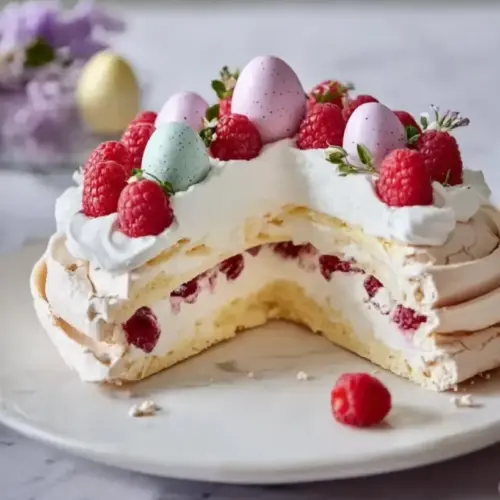
Easter Pavlova
Ingredients
Meringue Base
- 4 large egg whites Fresh and at room temperature recommended for the best volume.
- 1 cup granulated sugar Use a high-quality brand for the best flavor.
- 1 teaspoon cornstarch Helps achieve the lovely chewy texture in the center.
- 1 teaspoon white vinegar Adds stability to the meringue.
- 1 teaspoon vanilla extract Opt for pure vanilla extract for better flavor.
Toppings
- to taste whipped cream Freshly whipped is ideal.
- to taste seasonal fruits Berries, kiwi, or passionfruit are recommended.
Instructions
Preparation
- Preheat your oven to 300°F (150°C). Line a baking sheet with parchment paper and draw a circle about 8 inches in diameter.
- In a clean, dry bowl, beat the egg whites on medium speed until foamy (about 1-2 minutes).
- Increase to high speed, gradually add sugar one tablespoon at a time, beating until stiff, glossy peaks form (about 5-7 minutes).
- Gently fold in cornstarch, vinegar, and vanilla extract using a spatula.
- Spoon or pipe the meringue onto the prepared baking sheet, creating a dip in the center.
Baking
- Place in the oven and reduce the temperature to 250°F (120°C). Bake for 1 hour, then turn off the oven, leaving the meringues inside to cool completely.
Topping and Serving
- Once cooled, remove the meringues, top with whipped cream and seasonal fruits, and serve immediately.
- For enhanced flavor, macerate fruits with sugar for about 15 minutes before topping.